
Leading "Difficult" Employees
Our aim is to ensure that everyone has an excellent learning experience. With this in mind, here are some tools which might help you to achieve this:
Using the NVDA or JAWS screen reader for learners with vision loss.
Using Texthelp Read & Write for learners with dyslexia or other reading difficulties.
Please note that all downloads and links in the module will open in a new tab.
Accessible alternatives
To ensure that everyone has a great learning experience, all the learning and activities are accessible or, where required, are supported by accessible alternatives.
Tough Leadership Conversations: Leading “Difficult” Employees (download transcript)
Adam Lacey
Welcome to the Tough Leadership Conversations series. I'm Adam, the co-founder of Assemble You, the audio learning experts. I'm joined by Ruth Farenga, Executive Leadership Coach, TEDx speaker, host of the Conscious Leaders podcast, and author of the brilliant Next Level Leadership.
Together, we'll examine how to navigate some of the most challenging workplace discussions: think pay rise requests, performance reviews, managing managers, dealing with divergent views, and talking about mental health.
Unclear communication can lead to an erosion of trust, staff absenteeism, a breakdown of relationships, and a decline in performance, so getting these tricky conversations right is absolutely essential.
This series is as much about reflecting inward as a leader as it is about your day-to-day management practices and techniques. We'll discuss approaching situations with a positive intention. Fundamentally, we get the most out of individuals when we concentrate on what's working rather than what we perceive to be broken.
So, with that in mind, let's get started. Okay, Ruth, what are we talking about today?
Ruth Farenga
So today, we're talking about leading “difficult” employees.
Adam Lacey
I like that. And for those of you listening to this, I think many people will be, Ruth put quotation marks around the word “difficult”. And yeah, we're going to put that in the title because I feel like this is maybe a bit of a controversial, divisive word to use when describing someone. Describing people as “difficult.” But actually, we couldn't think of a better way to put this. So if you start with the context here, Ruth, what do we mean by a “difficult” team member?
Ruth Farenga
So I'm sure listeners will be all too aware of this. You know this is someone who is a very difficult person to work with. And perhaps you've tried lots of different things already in order to help them change, but you're struggling. You're struggling to kind of get the traction you might with other people. And it seems like they're even digging their heels in or getting worse or certainly not getting better in their behaviour. So you're struggling, is usually the situation.
Adam Lacey
Yeah. And I guess the reason for the struggle or the reason that you're not getting on or you are finding this person difficult to work for can be a myriad of different things. It could be all sorts of different kind of underlying problems. A couple that sprung to mind when we started thinking of this or started talking about this was actually maybe if you're going into a very established team or a team who have been working together a long time or doing a certain job for a long time, perhaps you are younger. Perhaps you don't have the same experience that they do and they've always done things a certain way, but you've been brought in to do things a different way. All these kinds of scenarios, I guess, can lead to that friction.
Ruth Farenga
Yeah, that's a good example. Perhaps a younger manager can feel like a threat to someone who's quite embedded in the organisation, or maybe it just doesn't want to undergo the types of change that you're trying to enact because they're quite “comfortable as they are, thank you very much.”
Adam Lacey
Yeah, exactly. Exactly. “It's always been done this way, so why do we have to change it?” Cool. Okay, so let's dig into this a bit. So, where do we even begin when we have someone who we are finding challenging like this? Someone who is “difficult?” And I guess we are using the term “difficult” because we know that a lot of the time there might be nothing particularly wrong with that person or the person that you're working with, this person in your team, people in your team. It might just be a number of very small things that, like micro-cuts, if you like, lead to a bigger problem. And these are things that are really difficult to pin down because maybe it's not a performance conversation, maybe it's not people haven't been getting on kind of conversation. Some of the other things we've covered in this series, this is actually maybe more of an attitude thing, dare I say. Yeah. Is that right?
Ruth Farenga
Yeah, it could be. It could be a performance thing that’s just really not making the improvements you wanna make. But we have covered a lot in this series already around performance management, etc. But, like you said, it could be an attitude thing. It could be that you are not seeing the willingness to change and that leaves you a bit stuck.
Adam Lacey
Yeah, very much so. So what do we do in this situation, Ruth? How do we begin to address this problem as a leader?
Ruth Farenga
Well, I've got seven steps. You'll be unsurprised to know, Adam, because I know you like a model. But the first two steps are really about reflecting inwards before we kind of go out into the world or speak to them directly.
First of all is always to try and understand the root causes of this, let's just say bad behaviour or behaviour we're exploring. So it could be stemming from something in their personal life. It could be that they have something like role confusion. Like they don't really know where they stand or they might feel undervalued, overlooked, or maybe there's some kind of value misalignment with the company where they want to behave in a very different way. Like, you know, they might be that the company's very logical and they’re more emotional or that, you know, there's, there's a whole sway of things that could be kind of root cause kind of thinking below the surface. Or sometimes you can just bring them to mind and kind of almost like get yourself in their shoes. What is it like to be them? Why am I kind of uncomfortable? Because essentially, I wouldn't be behaving badly unless I was not comfortable. So, what is going on for me? See if you can put yourself in your shoes.
The second sort of inward step is to check your bias. So it might be that we have put them in the annoying box and therefore everything that comes out of their mouth, we're like, “Ah! So annoying”, and, you know, we've basically decided that everything they say is a waste of time and irritating. So it might be their tone of voice as well. Sometimes, that can get our goat or something like this. So see if it's possible to be aware of it. It may not be a cause at all. But be aware if you've kind of got them in the “difficult” box and it doesn't really matter if they're saying something good because you're kind of screening that out because you've got this lens over them that says, you know, they're annoying. So those are the first two steps: looking inwards, root causes, and then check your bias.
So now we'll go to sort of looking outwards and I guess speaking to them. So firstly, feedback directly to them with compassion. We've talked about this in other modules, but I would be really clear that this is something you're noticing that isn't changing. So it could be something like, “I'm noticing your behaviour has been off for a while now. I'm not sure what is going on. Are you okay? Because I feel like I'm trying various things and it's not working, and I'm wondering why you might be unhappy or why you might be falling out with these team members, why you might be…” Whatever it may be. Because you know, you, we need to be able to hit this directly and focus on facts and behaviours. So what precisely you've noticed. Maybe it happens in a meeting again and you call them at the end of the meeting and be like, “Right. Can we talk about your behaviour in the meeting? This has gone on a long while now, but let's have a chat about it because I'm kind of concerned and I'm wondering if you're okay.”
So, feedback directly, then listen beyond the words. We've talked about listening quite a lot in these series of modules. What is their body language telling you besides their words? Are they telling you they're fine in their role and you think they're really not fine? You know, what is it? How are they feeling out of 10? You know, that can be a good measure because someone says they're fine, but actually they're four out of 10. You're like, okay, you're not fine, really. So, you know, be trying to get to the bottom of this really.
And then the fifth thing is to ask them what would help them change, you know, if that hasn't come out already. What do they need? They need more structure? They need more support? They need less support? They need a new role and they need to ultimately leave the organisation but they don't know how? You know, they may not better answer all this stuff, like on the spot, because this might have to be a series of meetings, but what is going to help them change? At the end of the day, you are here to support them. You know, assuming you're not exiting them from the organisation. We're here to support them. So what is gonna help?
Six. Set measurable ways for them to change. So be really clear. Get a joint document going with goals and behaviours so that you can draft them together and then bring them back to the meeting so that they can actually see the steps as opposed to it feeling a bit opaque.
And then seven, the final one, check in regularly. You know, it might mean you have to like zero in on this employee, like you have a weekly catch up focused on behaviour, for example. But you're doing that because you care and because you want them to be happy in the organisation and you want the team to be happy.
Adam Lacey
Really good seven points. On number six, you mentioned, you know, set measurable ways to change and actually record that. Any tips or advice on actually measuring recording behaviours? Because I feel like something can be very subjective. Like that behaviour, it's actually quite “difficult” to record it, to write it down, to articulate it in many ways. So, any advice for managers if you're going to create a document like that?
Ruth Farenga
Yeah.
Adam Lacey
What they should be looking to put in it?
Ruth Farenga
Yeah. Be really specific. Like, what is it about their behaviour you’re not liking? Is it that they're being too personal in meetings? So it could be something like, “Address the problem, not the person when we are critiquing something” so that we're not getting too personal. Or maybe being very reactive, so it might be an invitation to take three breaths before they dive in and interrupt a colleague. Trying to think of other examples…
You might be noticing that they, yeah, they get very angry quickly or you don't know if they're telling you the truth, so you might say you can be, I think we can be quite basic in a way here, like, “Speak the truth. Be honest with colleagues. Address the problem, not the person.” It can also be done as a group as well. If you want to depersonalise this away from the individual as part of this process, you can sit down as a group and be like, how do we want to behave? What's a great way for us to behave in a team? What types of behaviours do we want to be seeing from everyone and get that kind of agreed as a group and that can help people sort of know how to behave. Sometimes, people aren't even aware they're doing things that are upsetting other people.
Adam Lacey
I like that. And then I guess in terms of the examples or whatever, just be really specific around those as well. So just be like, “When you said this in this meeting to this person, it made them feel like this. And I don't think that was your intention, but they came to me afterwards, and they said that, and so this is what we're going to try and address. Talk about the problem,” in that example, or “We're not gonna react. We're gonna have a think about it and we're gonna come back with something more constructive.”
Ruth Farenga
Yeah. The specificity is really important because otherwise they'd be like, “Right, what do you mean? Like, give me some examples.” So that's gonna come back pretty quickly at you. So making a note of things I think is important because sometimes we just have a sense of something, but we need to make sure we've got evidence, for sure.
Adam Lacey
Yeah. Otherwise you'll be in the same situation of what you're saying will just mostly be ignored because they will say… it's very difficult to convince someone that they are in the wrong about anything. You think about your own kind of reaction to when someone says, “Oh, you did that incorrectly,” or “That was wrong,” or, you know, “You shouldn't have done that,” versus then trying to convince them with a feeling or like, “Oh, it just didn't feel right,” is not going to help that conversation at all. You've gotta be super, super accurate and specific in your feedback.
So the seven are: understand the root causes, check your own bias, feedback directly with compassion, listen beyond the words, ask what would help them change, set measurable ways to change with the person you're working with, and check in regularly.
Fantastic. Cool. Ruth, I wanted to go back to listening beyond the words because I feel like this is a really important one and a critical point in this journey. You know, we've reflected. We have checked our own bias. I think a lot of the, I guess, real power of a leader or the the best leaders or the best managers that I've ever had, have that ability to listen beyond the words. Sometimes, you're just not comfortable sharing what actually is the matter or you are not actually very good at articulating it as well.
You know, I can sometimes feel a bit off and it will take me a while to actually get to the bottom of why I'm feeling like that, you know? And so I think that listening beyond the words is really important. And do you have any extra tips on how we can get better at this? Because I feel like that's a real superpower and can really be the difference between helping someone in this situation or just having to say, you know, “This isn't going to work.”
Ruth Farenga
I’d say be more present. So it's very tempting isn't it, to whirlwind these meetings and try and do them quickly. But if you are busy of mind, you are gonna struggle to tune in to what's really going on for them. So that to the extent you can be more present, more grounded, you'll just start picking it up because I think as human beings we are highly attuned to others' feelings. But we forget that, or we don't hear it or see it when we're stressed, busy, running around.
Technically, things like tone of voice may not come across as attunely as, or even if it does, we don't have time to address it, so we have to take it at face value. Whereas if we give this a bit of space, then we can say something like, “Now I'm hearing you're saying you like your job, but that's not what I'm noticing. So is that actually true? You know, or is there something else going on?” Because this is about trust, right? They're not gonna tell you if they don't trust you. That may be already somewhat established or not. And if it's not, then it's gonna need a bit of building that trust that they are able to open up to you. It doesn't mean they have to tell you their life story necessarily, but they can share something, an insight that will be like, “Oh, okay, now I get it.”
Adam Lacey
And I guess this is where the power of asking open questions and letting that question hang. I think something that I'm certainly guilty of is diagnosing other people a lot of the time and saying, “Oh well, obviously you might feel like this because of this”. And I think that's a terrible thing to do because you could be way off the money and actually miss the point entirely. Or they, to take the least path of resistance, just agree with you and actually that's not the real issue. So there are open-ended questions I think are really, really powerful there. That's something you are very good at, Ruth, is leaving the space for the other person to talk. So ask the question and then just pause and just don't say anything.
Ruth Farenga
Yeah. Silence can feel uncomfortable for a lot of people, but it's really powerful if you can couple it with presence. So if at the end of your feedback session, you say, “Okay, before we close, just wondered if there's anything else you wanted to share that is relevant here”, and hold your nerve, and hold the silence, and just be like, “Just wondering…” Don’t be like, “No? Good! Right, bye! Let's go.” Who knows in that 5, 10, 15 seconds that emerges, what might come out if we let it be?
Adam Lacey
Yeah, I've definitely found in the past sometimes they won't say it in that moment because you've maybe caught them off guard, but they immediately start to think about it. So they immediately start to think about the problem or the issue. And they maybe want to say something, but our reflex reaction is “Everything's fine!” It's like if someone asks you, “Oh, how are you?” 99% of the time, you say, “Yeah, I'm fine.” Even if you're not. Even if you're having the worst day ever.
Ruth Farenga
And you know me, Adam, if you do that, I'm going to be like “Out of 10, Adam?”
Adam Lacey
Yeah, exactly. Exactly. So I like that. Using the “Out of 10?” as a way to kind of pull that back round. But also I feel like if you're consistent with that question, and if it's a question you ask every week, then the next week when you ask that question A, it's not a surprise. It doesn't catch them off guard. And B, they might have actually had some time to process and think about what they would say in that situation. And how they would answer it.
Ruth Farenga
There's one thing we haven't covered here. I think is a kind of firmness and steadfastness that you need to demonstrate. Like this is not going away, right? We are clearly not getting on so well, or there are some, you know, discordance in the team. So we need to get to the bottom of it. So, I am here for you and the team. This problem isn't going away until we're compassionate and kind, we need to be strong. Because it's not acceptable to continue like this. And that's the real, we're always talking about the tightrope, I think on this series, you know, that's the tightrope, backbone, and heart. Like, you know, this is, “I'm not a pushover. I'm not going let you behave like that on an ongoing basis. It's just not cool. But I do care about you and I want to know why and if I can help make your life better.”
Adam Lacey
No, you're right. And especially important if maybe you've gone through some of these steps and you are doing these things, but there is still no change and you've with led with compassion, and you’ve led with understanding and empathy, and you're listening intently and you're asking the open questions. You know, you're seeing how they are out of 10. The weather is another one that you've used in the past as well, which I quite like, Ruth. Which is like, you know, if you would describe your emotions right now as a weather forecast, what would you say?
Ruth Farenga
Yeah, it's nice to kind of check in at the beginning and see. If someone's got a tornado every week, we might wanna have a follow up chat, but we don't have to explain it. Then you can just say, you know, bright blue skies or small hurricane blowing through my life right now.
Adam Lacey
Yeah. But the thing, if they don't, you know, if there isn't that change, and if these things aren't working, then getting that balance of, I guess, you know, firmness, firm-handed, backbone, as you like to call it, is really important because at some point it's gonna cause disruption to everybody else.
Ruth Farenga
Because you have to protect the team as well. If one individual is causing a lot of problems ultimately, they may need to be exited from the organisation. We have to go through these steps to make sure we give them the best chance of turning it around, and then kind of like you sort of intimated there; it's like we can get firmer as time goes on.
Adam Lacey
Yeah, so I think, yeah, start being more compassionate. That was my question, it was like how do we, actually, I had a question written down, which is basically how do we balance compassion with firm handedness? But I think you're right. It's a journey, isn't it? I think if there isn't the change happening that should be happening, then there's an element of, okay, this is being escalated because this is now more serious and there's no change and also the thing to remember is, and I've had these kinds of conversations with people over the years, but where that is happening, that job, that organisation, is just not the right place for that person, you know, providing, it's not something massive happening in the personal life that's being dragged into work. But hopefully, you know, you've got to the bottom of that and you're able to offer some support around that.
If it is just the fact that they just hate their job and hate the team, whatever, then should they really be doing that? And should they be miserable every day for the sake of that? Because we're in a very fortunate position in, you know, developed democracies that there will probably be a job we can do that makes us a bit happier that will pay us enough to, you know, have a decent life, have a meaningful life. So I think that's the other thing to remember is that you could be doing somebody a disservice, you could be doing someone a very big disservice, by letting this kind of just slide and ignoring it. Well, not only a disservice to your team but actually to that person as well. There was a model, you mentioned Ruth, when we were talking about this, I believe it's called the Change Equation.
Ruth Farenga
The Change Equation. Yeah. I think this is really useful to think about when people won't change or you can't see change.
So the Change Equation by Beckhard and Harris, think you looked that up for me, Adam, thank you, is dissatisfaction with the status quo times by our vision of the future times by knowledge of the first steps divided by the resistance to change.
So, I’ll go through that again. So firstly, it's “I am unhappy with where I'm at. I'm dissatisfied with the status quo” and times that by, “I'm aware of a vision of the future and how things can be different,” times that by “I know what to do next to make the change” and then divide that by, “I'm not too resistant. I'm up for this.” And I think when we are thinking about why someone won't change, we can look at that. It might be that they're, in a way, kind of satisfied with the status quo. Like they've got a good pay, no one's been questioning their behaviour in the past. So they're, you know, just carrying on as they are. Or they didn't have a vision of the future, they can't see how they could behave differently or enjoy work and life better, or they don't know the first steps to do it. So, you know, we can work on some of these different things. We can work on things like goals and behaviours. That's really good for vision of the future, and knowledge of the first steps.
Resistance to change, this is, I guess, the biggest piece here, really, because it's about attitude, but that can still be broken down. Can still talk about the attitude to wanting to be different. Because there's very little you can do if someone is gonna dig their heels in more and more but you can call that out. So I think it's quite a useful way to kind of unpick an individual's actions basically and think, “Oh, what is going on for this person?” It's really good to reflect on yourself as well. If you wanna make a change but you're not doing it, it's a great model to bring out and be like, okay, why am I not doing this thing as a starting point?
Adam Lacey
Right. That's a good one. Good one to remember. Cool. Ruth, let's recap this episode on leading “difficult” employees.
Ruth Farenga
Sure. So we've got a seven-step process here. Firstly, reflecting inwards and then talking to the individual. So, firstly, try and understand the root causes. Secondly, check your own bias. Thirdly, feedback directly to them with compassion. Number four, listen beyond the words. Five, ask what would help them make the change. Six, set measurable ways to help them change. And seven, check in regularly.
Adam Lacey
Brilliant. A seven-step guide to helping you with some of the most tricky conversations you're gonna experience as a manager. Ruth, that's a really great framework to remember and I hope everybody finds that useful. Thanks once again for another brilliant episode in this Tough Leadership Conversations series. Do join us for the next one.
You’re a senior leader, and one of your department heads, Jo, has developed a reputation for being “difficult.”
She consistently resists change initiatives, often challenges decisions in leadership meetings, and her tone has become increasingly dismissive in one-to-ones. While she’s highly experienced and delivers results, her attitude is affecting collaboration with peers and has started to create a divide within her own team.
You’ve noticed that other leaders hesitate to engage with her, and some newer managers have expressed concern about her influence on team culture. You want to address the issue directly but you also recognise the need to lead with empathy, protect psychological safety, and avoid escalating defensiveness.
- How can you raise concerns about Jo’s leadership behaviour in a way that’s clear, fair, and aligned with the values you expect her to model?
- What mindset do you need to bring to the conversation so it’s driven by growth and support rather than frustration or judgement?
- How can you balance firm accountability with genuine curiosity about what Jo might be experiencing under the surface?
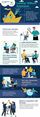
Leading "Difficult" Employees
Leading "Difficult" Employees
Identify why an employee may be acting in a challenging way.
It could be personal issues, role confusion, or a misalignment with company values.
Check your own bias
Ensure you are not unfairly labelling someone as "difficult."
Be mindful of personal assumptions and perceptions.
Listen beyond words
Observe body language and tone.
Ask open-ended questions and allow space for honest responses.
Give direct, factual, and compassionate feedback
Show concern and ask if they are okay before jumping to conclusions.
Encourage employees to share what support or adjustments could help them improve their behaviour or attitude.
Set clear, measurable expectations
Work collaboratively on a plan for change.
Follow up consistently
Reinforce positive changes and provide ongoing support.
Balance compassion with firmness
Support the employee while making it clear that disruptive behaviour cannot continue.
Ensure the team’s well-being is also protected.
(download infographic)
What did you think of this lesson?
Answer to complete this lesson.